
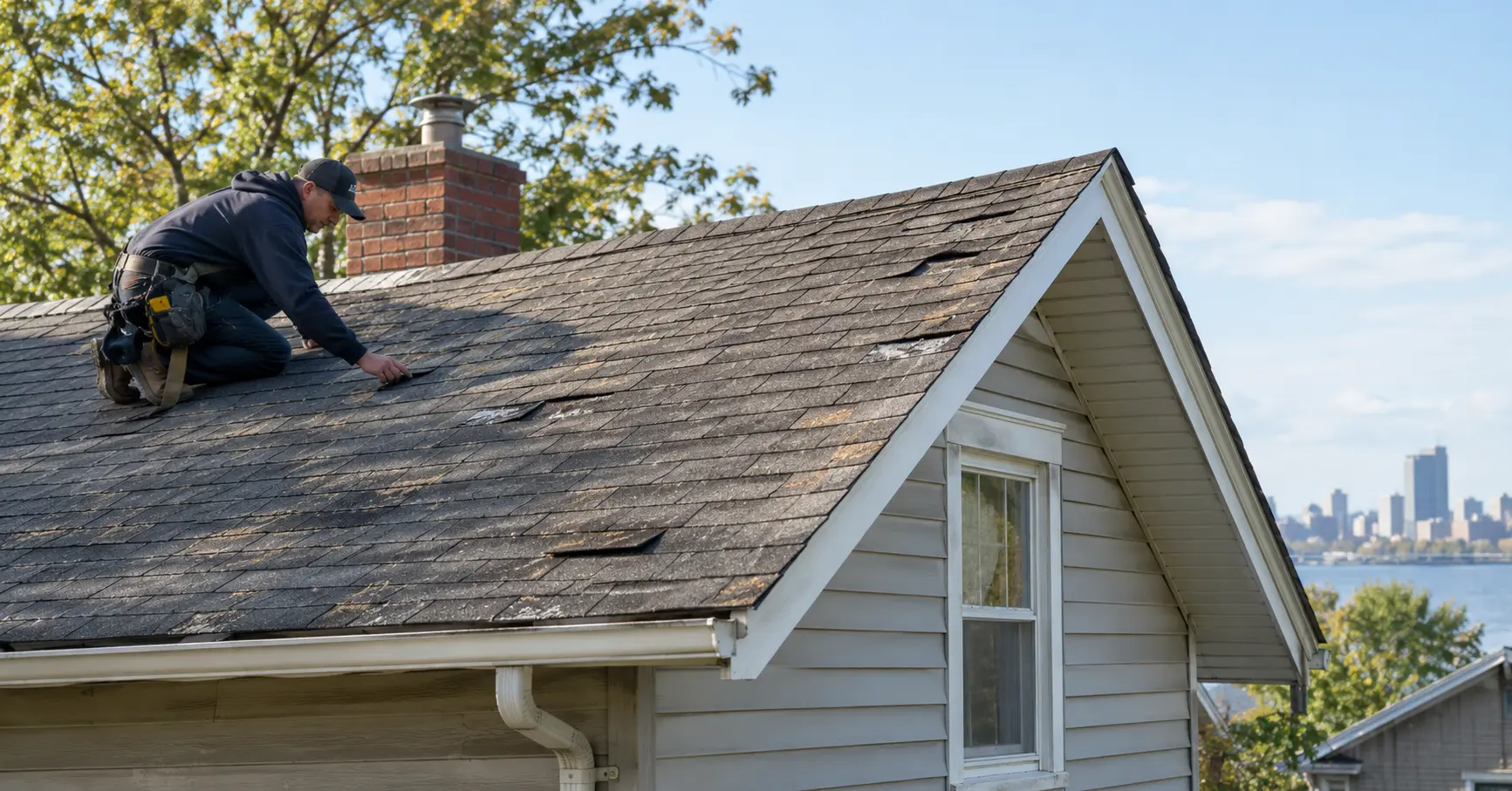
You notice a brown spot on the bedroom ceiling. Or you go to clean the gutters and they’re full of black grit. Most people in Toledo don’t think twice about their roof until something like that happens. Then there’s one question. How bad is this?
We’ll go through the problems we see most on Toledo homes, what’s usually behind each one and what you can actually do. Some are a quick fix. Some mean the roof is done.
Why Do Toledo Roofs Have So Many Problems?
Honestly? Age and weather. Toledo is an old city, housing wise. More homes here were built in 1939 or earlier than in any other period, over 42,000 of them. That usually means old board decking that’s been nailed through two or three times, chimneys still wearing their original flashing and attics with barely any insulation or venting. Then the weather piles on. In 2026 alone, storm trackers recorded five hail reports within 10 miles of the city, with stones up to quarter size, along with gusts around 70 mph in April.
So what should you do? If your house is older, don’t wait for a stain to tell you something’s wrong. Get the roof looked at once a year, before the snow if you can. And ask your inspector three things.
- Is there an ice and water barrier at the eaves?
- Is the attic vented at the soffits and the ridge?
- What shape is the chimney flashing in?
Those answers say more about the next five winters than the shingles ever will.
Why Does My Roof Only Leak in Winter?
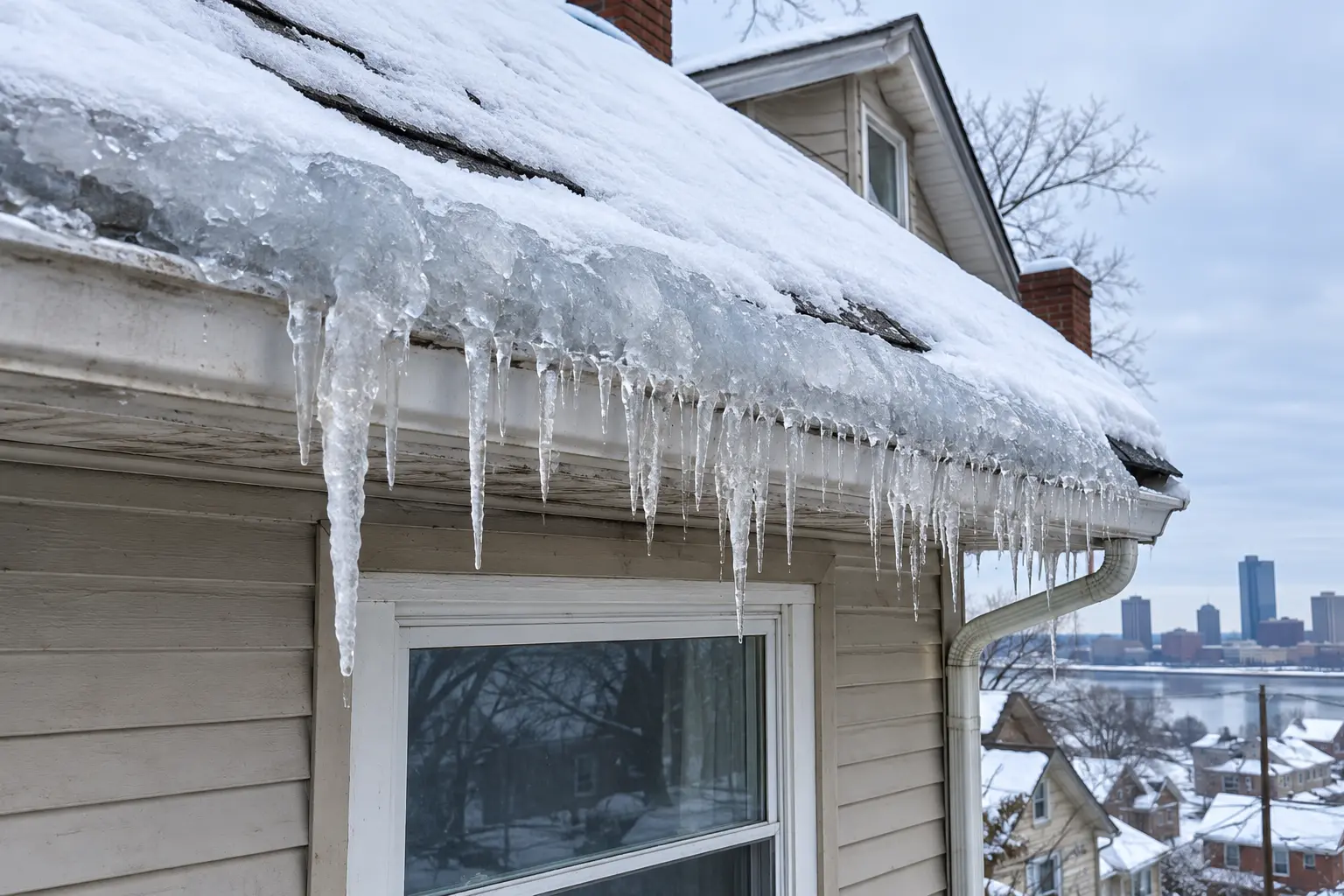
Nine times out of ten it’s an ice dam. Heat sneaks out of the house, melts the snow on your roof, and the water runs down to the cold edge where it freezes again. That ridge of ice keeps growing, and the meltwater backs up behind it and slips under the shingles. You’ll see thick ice along the gutter, big icicles and usually a stain on the ceiling near an outside wall.
Please don’t climb up there with a hammer. Ohio’s building officials specifically warn homeowners not to go up and try to remove or melt the ice, and chipping at it rips shingles anyway. The real fix happens before winter. Seal and insulate the attic so the heat stays where it belongs. Make sure there’s an ice and water barrier along the eaves and valleys too. Lots of older Toledo roofs never got one. Replacing yours? Ask for it, and look at which roofing materials hold up best in Toledo weather.
Why Is There a Stain Around My Chimney or Vent Pipe?
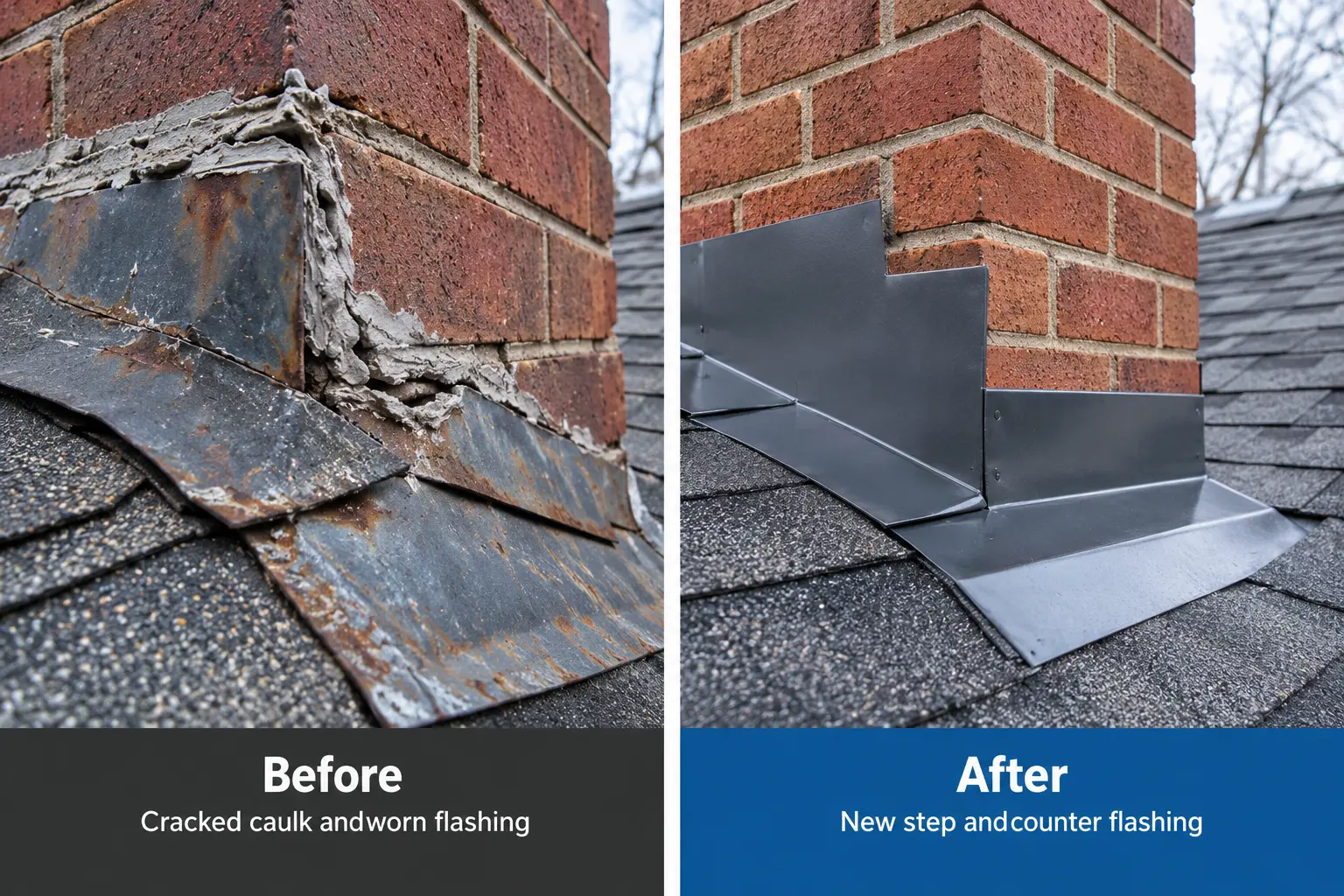
It’s the flashing. Almost always. Shingles in the middle of a roof don’t leak much. Water gets in where the roof ends and something else begins, like the chimney, a skylight, a wall or a plumbing vent. Old chimney flashing bends, caulk dries out and the freeze and thaw cycle pulls it loose. The rubber boots around vent pipes crack in the sun after enough years.
Here’s the good part. This is often a repair, not a new roof. A cracked pipe boot is a small job. Chimney flashing done right, with step flashing and counter flashing cut into the mortar, lasts a long time. A big glob of caulk over the gap won’t. If your stain keeps coming back after someone “fixed” it, that’s probably why.
Why Are Shingle Granules Showing Up in My Gutters?
A little grit is fine. New roofs shed loose granules for about the first year, and every roof drops a few after a hard rain. Nothing to worry about. What you don’t want to see is dark bare patches on the shingles, a pile of grit at the downspout after every storm, or shingles that feel smooth instead of like sandpaper. On an older roof, that’s the shingles wearing out. Right after a storm, small round bare spots usually means hail.
What to do depends on the roof’s age. Under about 15 years old and the grit showed up right after a storm? Get it inspected and photographed before you call insurance, since that’s likely storm damage and might be covered. Near or past 20 years with bare patches on several slopes, repairs won’t buy you much time. Get a quote from a roof replacement contractor in Toledo before a leak makes the decision for you in January. Somewhere in between, have it checked every year so you can tell if it’s getting worse.
Can Wind or Hail Damage My Roof if Nothing Looks Wrong?
Yep. A strong gust lifts a shingle, folds it back and drops it. The seal breaks, and now there’s a crease across the tab. From the street? Looks perfect. Next storm, that’s the one that flies off. Hail is sneaky the same way. It bruises shingles and knocks granules loose without leaving a hole. During the June 2023 storms, hail over 2 inches fell around Toledo, with near baseball size stones in Point Place. Roofs that got hit like that can look normal for a year before they start leaking.
After a big storm, walk the yard and look for shingle pieces. Snap a few dated photos of the roof from the ground. Then get an inspection within a few days, not a few months, because creased tabs can often be resealed or replaced if somebody catches them early. Check your policy too. Most homeowners policies have a deadline for reporting storm damage and if you wait too long you can lose the claim. Have the inspection photos ready when you call your agent. Want help with the adjuster? See our insurance roof claims assistance page, or read how to handle storm damage roof repairs in Toledo.
Why Is My Attic Wet or Frosty in Winter?
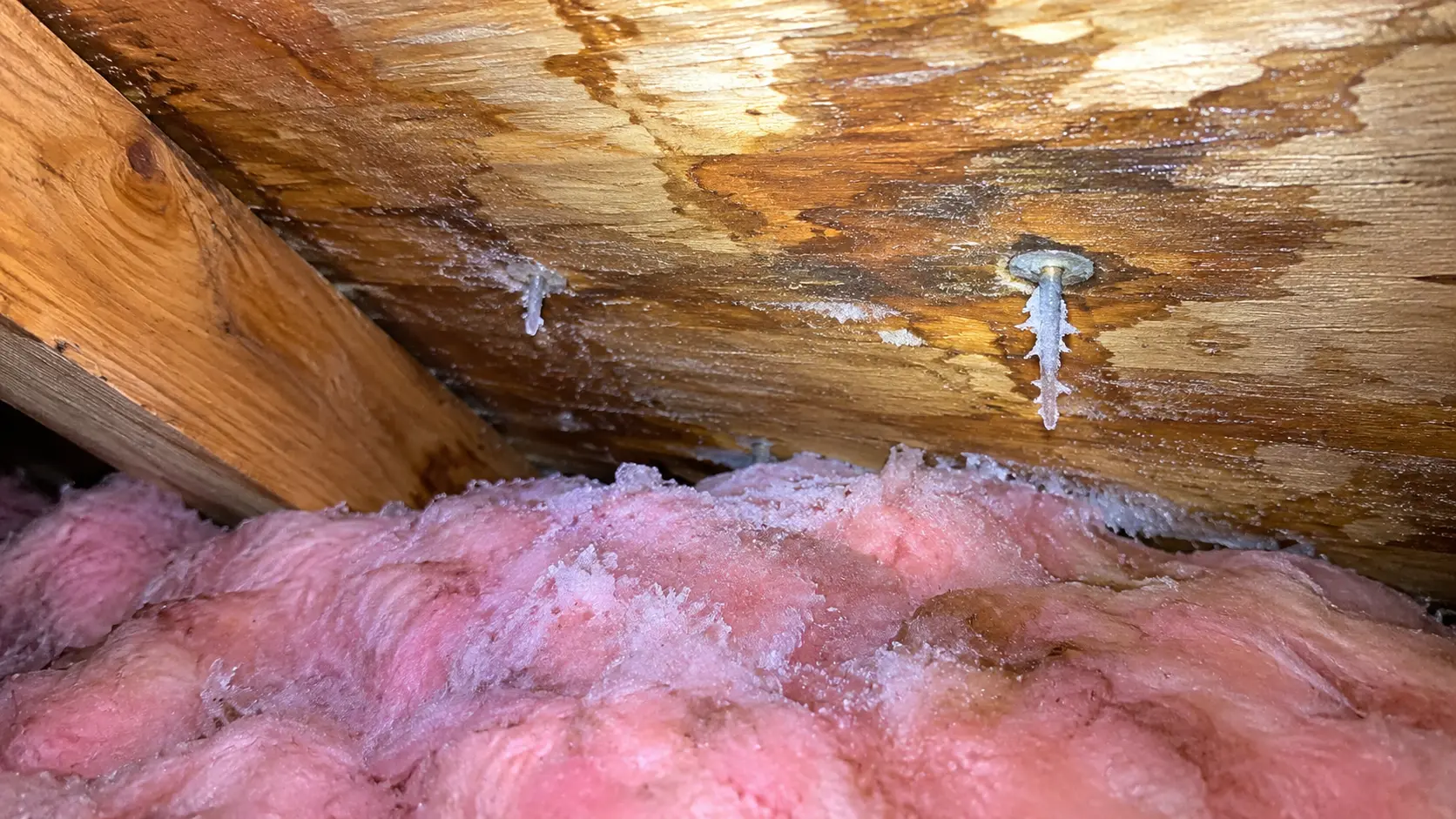
Plenty of “leak” calls turn out to be condensation. Warm, damp air from showers, cooking and laundry rises into the cold attic and hits the underside of the roof deck. In January it freezes into frost on the nail tips. Then the first warm day comes, it all melts and drips onto the insulation. It looks exactly like a roof leak. It isn’t.
The fix is getting air moving and sealing up the gaps. Intake vents at the soffits, exhaust at the ridge and nothing blocking the path in between. Bathroom fans need to vent outside, not into the attic. We still find that on older Toledo homes. Bad ventilation also bakes your shingles from below in the summer and shortens their life, so this matters all year long.
Why Does My Roof Look Wavy or Saggy?
If the roofline dips, the problem is the deck underneath, not the shingles. Years of moisture from leaks or condensation rots those boards. Older houses sometimes have two or even three layers of shingles stacked on decking that was never built to carry that much weight.
You can’t patch this from the top. The old layers come off, rotted boards get swapped out and the new roof goes on over solid wood. One tip. Ask any roofing contractor in Toledo quoting your roof what happens if they find bad decking once the shingles are off. Get the answer in writing before work starts. It’s one of the questions to ask a roofing contractor before you sign anything.
Are Clogged Gutters Really a Roof Problem?
They are. Gutters packed with leaves and shingle grit leave water sitting right at the edge of the roof. It soaks into the fascia board and the first row of decking. Come winter, it freezes solid and makes ice dams even worse.
Clean them in late fall after the leaves are down and again in spring. If you’re up there more often than that, gutter guards are worth looking at, especially if you have big trees. Gutters that overflow in heavy rain even when they’re clean are probably too small, or there aren’t enough downspouts for your roof. Also press on the fascia board behind the gutter. Soft means rot has started. Replace the fascia and add a metal drip edge so water lands in the gutter, not behind it.
What Can I Check Without Getting on the Roof?
More than you’d think. Take a few minutes and go through these.
From the Yard (binoculars help)
- Missing or curled shingles
- Dark bare spots where granules are gone
- Anything lifted along the edges
- Shingle pieces in the grass after a storm
- Granules collecting at the downspouts
In the Attic (go on a sunny day with a flashlight)
- Daylight showing through the boards
- Dark stains on the wood
- Damp or flattened insulation
- Frost on the nail tips in winter
Inside the House
- Stains on ceilings near outside walls
- Stains or peeling paint around the chimney
Take photos with the date on them. If you ever file a claim, you’ll be glad you did.
Which Roof Problems Can’t Wait?
Water coming in right now. A chunk of shingles torn off. A tree limb on the roof. A sagging spot that wasn’t there last month. Those need someone today, not next week. Put a bucket down, move what you can and call for emergency roof repair.
Everything else here gets worse and costs more the longer it sits, but you have time to get a proper look first. A slow stain, some granule loss, a few creased tabs. Book an inspection, get the photos and make the call with real information. And please don’t sign anything with a door knocker the morning after a storm. If you do need a new roof, pick a roof replacement company in Toledo with a real local office, not whoever knocked first.
How Roofing419 Handles These Problems
We’re a family owned residential roofing company in Toledo, and our own crew does the inspection. Not a subcontractor. Every visit is a free 19-point inspection, we photograph what we find and we walk you through every photo. You’ll get a straight answer on whether it’s a repair or a replacement.
If the roof does need replacing, we install asphalt shingles with a 40 year shingle warranty or Decra stone-coated metal roofing, and we back the work with a 25 year workmanship warranty. Financing as low as $99 a month is available, subject to credit approval. Give us a call at (419) 509-0456 or schedule a free roof inspection with your Toledo roofing company.
Toledo Roof Problem FAQs
Can a roof leak without any missing shingles?
Yes, all the time. Bad flashing, cracked vent pipe boots, ice dams and attic condensation can all put water on your ceiling while every single shingle is still where it should be.
Should I remove an ice dam myself?
No. An icy roof is dangerous, and chipping at the ice damages the shingles. You can use a roof rake from the ground to pull fresh snow off the lower edge. Leave the ice to a pro and fix the attic insulation and venting before next winter.
Does homeowners insurance cover ice dam damage in Ohio?
Often, but it comes down to your policy. Many standard Ohio policies treat ice dam damage as a sudden, accidental event under dwelling coverage. Normal wear and an old roof usually aren’t covered. Call your agent and take photos of the damage before anything gets fixed.
How long does a shingle roof last in Toledo?
Standard asphalt shingles last roughly 20 to 25 years with decent upkeep, and architectural shingles tend to hold up better than three-tab in Ohio weather. Poor attic ventilation and repeat storm hits can shorten that.
Can a roof be replaced in winter in Toledo?
Yes, most days. Shingle sealant strips need warmth to stick, so in the cold crews hand seal the tabs and work around snow and ice. Emergency repairs happen all year.


