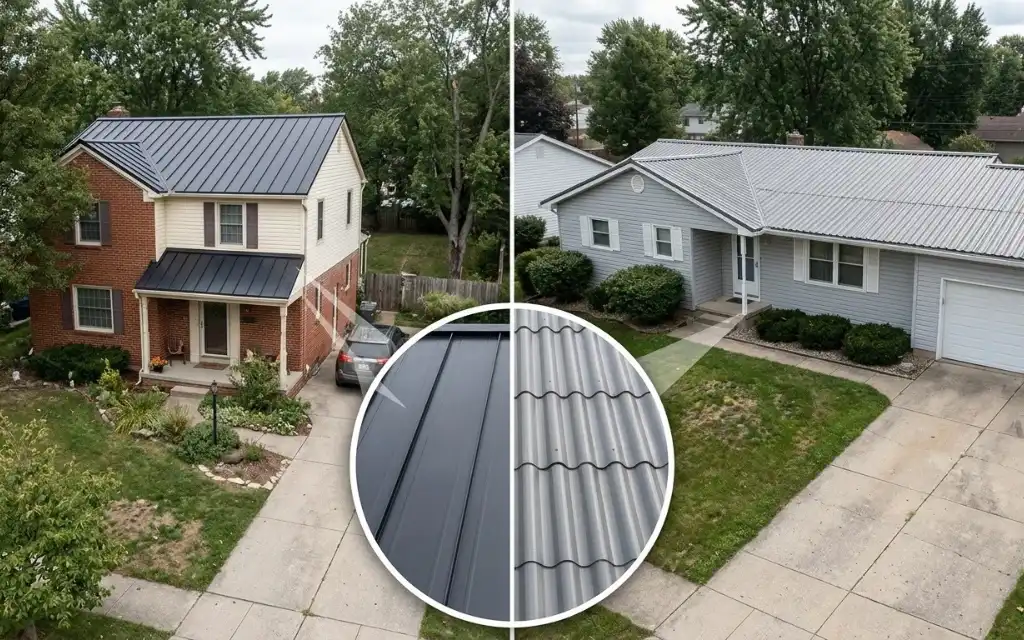
The standing seam hides its fasteners under raised, locked seams. Corrugated screws straight through the face of the panel. That one difference drives everything else. Standing seam costs more but needs almost no upkeep. Corrugated costs less but its screws need checking over the years. For most Toledo homes, standing seam is the better fit. For barns, garages and pole buildings, corrugated usually wins.
Most homeowners shopping for metal roofing in Toledo hit this question the same way. They ask two companies for a quote, and one comes back far cheaper than the other. Same “metal roof,” very different price. Usually it’s because one quote is standing seam and the other is corrugated. Knowing the difference keeps you from comparing two different roofs as if they were the same.
What’s the Difference Between Standing Seam and Corrugated?
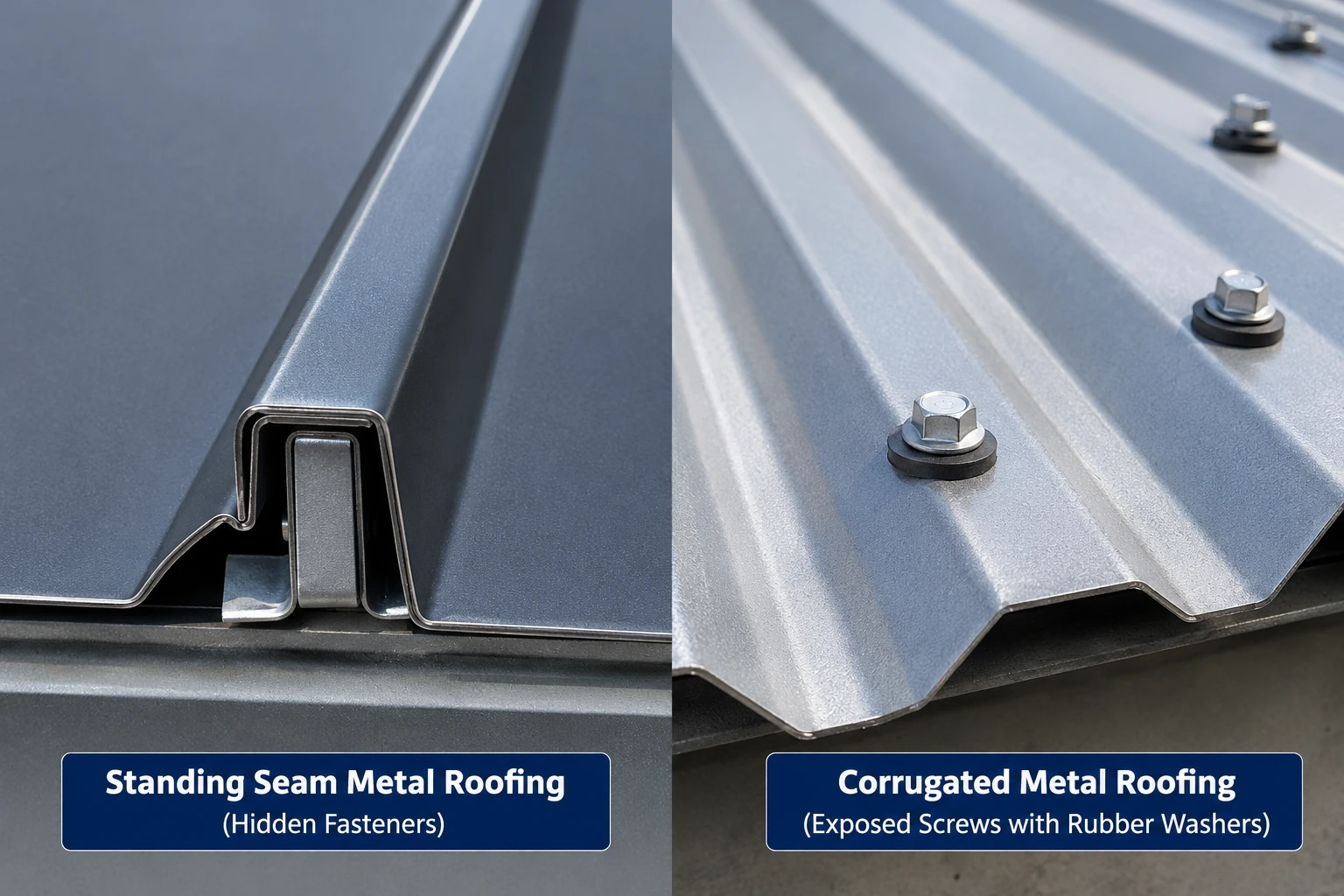
Standing Seam vs. Corrugated Metal Roofing: Fasteners and Panel Design
Standing seam panels attach to the roof deck with clips or a nailing flange. The next panel locks over the top and hides the connection. Nothing punches through the flat part of the roof. A few trim pieces may still use exposed screws, but the main roof surface stays sealed.
Corrugated is the wavy panel used on most metal barn roofing. Screws with rubber sealing washers go right through the panel into the wood below. Panels overlap at the edges instead of locking together. It’s simple, fast to install and has been around a very long time.
Quick Comparison
| Feature | Standing seam | Corrugated |
|---|---|---|
| Fasteners | Hidden under the seam | Screws through the panel face |
| Upfront cost | Higher | Lower |
| Maintenance | Very little | Screws and washers need checking |
| Snow shedding | Fast, smooth flat panels | Slower, ribbed surface |
| Minimum slope | As low as 1:12 (mechanically seamed) | Usually 3:12 |
| Look | Clean, modern lines | Rustic, agricultural |
| Best for | Homes, long ownership | Barns, garages, budget projects |
How Toledo Winters Treat Each One
Metal grows a little when it warms and shrinks when it cools. Toledo winters swing back and forth across freezing all season. On a standing seam roof, the clips let each panel slide as it moves. The fasteners never take the stress.
On corrugated, the screws are locked through the panel. Every swing pulls on them a little. Over time the rubber washers harden and crack, and screws can back out. That’s where corrugated leaks usually start. It’s not a defect, it’s maintenance. But it’s maintenance a standing seam roof doesn’t ask for.
Snow, Ice and Snow Guards
Toledo averages about 37 inches of snow a year. Both panels shed snow better than shingles. The standing seam’s flat panels let it slide faster than corrugated ribs do. That’s good for ice dams. It’s bad if your front door or driveway sits under the eave.
Snow guards hold snow on the roof so it melts off slowly instead of dropping all at once. On standing seam, they can clamp onto the seams without drilling through the roof. If sliding snow could land on a walkway, a car or your gutters, ask about snow guards before the roof goes on, not after the first storm.
Why Corrugated Costs So Much Less
Our metal roof replacements in Toledo generally run $25,000 to $35,000. Where a roof lands depends on panel type, roof size, pitch and decking repairs. Panel type is the biggest single factor in metal roof cost in Toledo, Ohio. Corrugated panels cost less, and so does the labor. They go on faster and take less specialized skills. The standing seam needs clips, custom trim and a crew that installs it regularly. Most industry estimates put corrugated at roughly half to three quarters of the installed price of standing seam.
Gauge and finish matter too. A thick corrugated panel with a quality finish can outperform a thin standing seam panel. When you get a roofing estimate in Toledo, OH, make sure it lists these.
- Panel type. Standing seam, corrugated or another exposed-fastener panel.
- Steel gauge. Lower numbers mean thicker steel.
- Paint finish. The coating decides how long the color and protection last.
- Fastener type. On corrugated, ask what screws and washers they use.
If a quote leaves any of these out, ask why.
Where Corrugated Makes Sense
Corrugated is the right call on pole barns, detached garages, sheds and equipment buildings. The look fits, the budget fits, and checking screws every few years is easy on a simple roof. It also hides waviness and small dents well because of all the ribs.
It can go on a house too. Some homeowners want the farmhouse look on purpose. Just know you’re signing up for periodic fastener checks.
Where Standing Seam Makes Sense
Standing seam fits homes where you plan to stay a long time and want a roof you can mostly forget about. It also handles lower slopes, so it works on porches, additions and shallow roofs where corrugated may not drain well. It’s less forgiving to install, so ask any metal roofing contractor in Toledo, Ohio how many standing seam roofs they’ve actually done.
The one thing to know is oil canning. That’s a slight waviness you might see in the flat part of the panels in certain light. It’s cosmetic, not a leak. A matte finish or panels with small stiffening ribs make it much less noticeable.
The Option Most Toledo Homeowners Don’t Know About
A lot of people who ask about standing seam really want a metal roof that looks like a normal house roof. That’s stone-coated steel, sometimes called metal shingle roofing. It’s steel shaped and coated to look like shingles, shake or tile. We install Decra and Roser systems as a Decra Partner in Quality and Roser Certified Installer.
Decra carries the highest Class 4 impact rating, and its warranty covers winds up to 120 mph and hail up to 2.5 inches. Most of our stone-coated metal roofing in Toledo, OH projects run $25,000 to $35,000. For how it compares to shingles, read best roofing materials for Toledo weather.
Which Metal Roof Fits Your Building?
- A home you’ll keep for 15+ years. Standing seam or stone-coated steel. Both need very little upkeep.
- A barn, garage or pole building. Corrugated. It’s the most cost-effective metal roof for the job.
- A shallow roof or low porch. Standing seam handles lower slopes than corrugated.
- You want metal but a traditional look. Stone-coated steel.
- HOA neighborhood. Check your HOA rules first. Some allow standing seam but not exposed-fastener panels.
Not Sure Which Metal Roof Your Building Needs?
Schedule a free roof inspection. As a local roofing company in Toledo, we’ll check your roof’s slope and condition, talk through what you want it to look like, and give you a written quote. 1640 Coining Dr, Toledo.
Frequently Asked Questions
Is standing seam better than corrugated metal roofing?
For most homes, yes. Hidden fasteners mean fewer leak points and less maintenance. Corrugated is still a solid choice when cost matters more and the building is a barn, garage or shed.
Which is cheaper, standing seam or corrugated?
Corrugated, our corrugated metal roof replacements in Toledo generally run $25,000 to $35,000, and panel type, roof size, pitch and steel gauge decide where yours lands.
Can you put a corrugated metal roof on a house?
Yes. It works on homes when the roof has enough slope and the owner is fine with the look and the fastener upkeep.
How often do corrugated roof screws need to be replaced?
There’s no set schedule. Have the roof checked every few years and after big storms. Replace any screws that are loose, rusted or have cracked washers before they leak.
Which metal roof is better for solar panels?
Standing seam. Solar racking can clamp onto the raised seams without drilling through the roof. Corrugated mounts usually need fasteners through the panel.
Is a corrugated metal roof loud in the rain?
On a barn with open framing, yes. On a house with solid decking and underlayment underneath, most of the sound is deadened.